(1) Solution Overview
Rolling stock depot maintenance requires inspections for multiple trains and numerous check‑items within a limited operation window. Traditional manual inspection involves heavy workloads, while a single detection device cannot cover all viewing angles. Decentralized vehicle positions, work permit approvals, test results and maintenance records also raise difficulties in operation handover.
Supported by the vehicle maintenance management system, this solution implements preliminary appearance inspection via 360° dynamic image detection. Train‑inspection robots perform precise inspection of train underbodies and sides as well as supplementary checks for blind areas, followed by manual re‑verification for items not covered by equipment. The train inbound‑outbound system and work permit management system synchronize vehicle positions and operation statuses to realize coordinated operation between detection equipment and maintenance workflows.
(2) Core Functions and Solution Composition
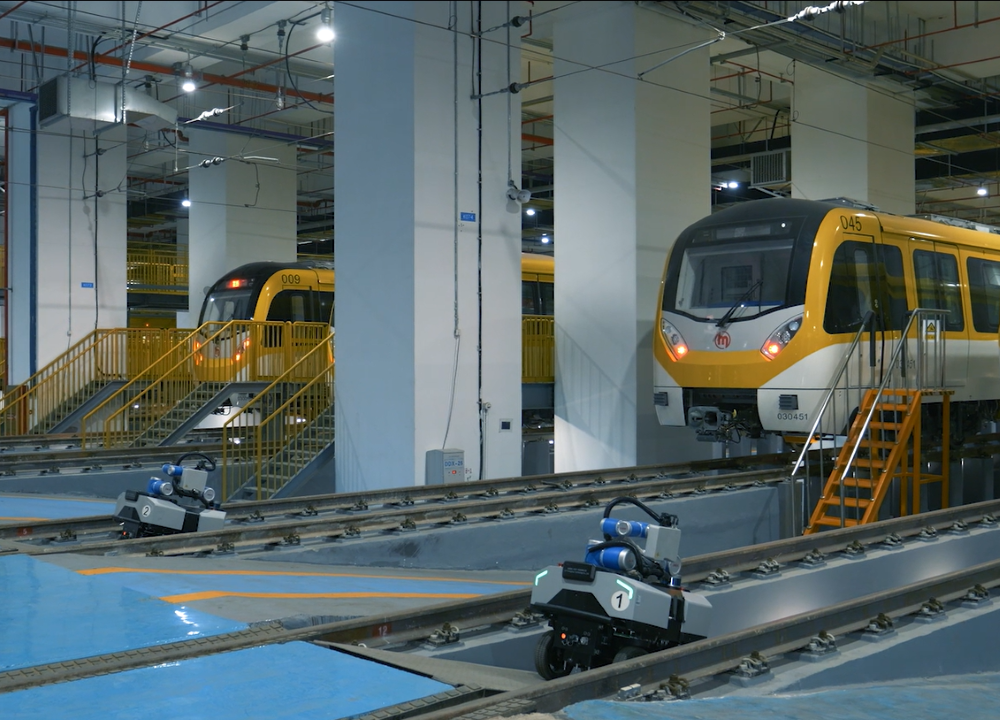
Train‑inspection Robot: After trains are parked, it conducts fine‑grained inspections on designated parts of train underbodies and sides according to assigned tasks, compensating for viewing blind spots of 360° detection. It provides images and recognition results for components including couplers, bogies, fasteners and pipelines. Manual re‑verification is retained for items that cannot be judged from images or are beyond equipment coverage.
360° Dynamic Image Detection System: Captures vehicle appearance images as trains pass through the detection zone to complete preliminary perimeter appearance inspection. Inspection data is transmitted to the track‑side data processing center as inputs for subsequent precise inspection and re‑verification.
Train Inbound‑outbound System: Acquires train numbers and parking information and feeds data back to the work permit management system. When a train enters a relevant track, nearby robots are notified to stop crossing that track, supporting operations under restricted‑zone management.
Work Permit Management System: Supports remote work permit application‑approval, vehicle status verification, duplicate permit prevention, permit closure time reminders and handover reminders between inspection and dispatch teams. Operation information is fed to the robot dispatching system and control terminals to provide foundations for task issuance.
Vehicle Maintenance Management System: Based on maintenance specifications and inspection schedules, it links inspection results, manual re‑verification, fault rectification and operation records. It coordinates with car‑washing, train departure and other work arrangements to build a traceable maintenance business workflow.
Business Workflow: Trains pass through the 360° detection zone for preliminary inspection; the inbound‑outbound system updates train numbers and parking positions; maintenance tasks are issued after work permit approval and status verification; robots carry out precise inspection; staff re‑verify anomalies remotely or on‑site; fault rectification and operation recording are completed, followed by permit closure per management procedures.
(3) Technical Highlights and Differentiated Advantages
Complementary Layered Inspection: 360° detection implements pass‑through preliminary inspection; robots supplement complex‑angle checks for train underbodies and sides; personnel focus on re‑verification and uncovered‑item checks. Linked vehicle position and operation status: information is exchanged among the inbound‑outbound system, work permit system and robot dispatching system to eliminate information disconnection between track changes and inspection tasks.
Collaboration between Distributed Equipment and Centralized Data: Devices are deployed in online inspection sheds, operation depots and DCC, connected via optical fibers, wireless networks or 5G. Inspection data is processed and interacted by the track‑side data processing center and data algorithm backend.
Reference Check‑item Statistics: The PPT example includes 1359 underbody and side inspection items, of which 779 items (57.3%) are covered by 360° detection, 408 items (30.1%) by robots and 172 items (12.6%) by manual work. In‑car maintenance is excluded. This dataset serves as an example of task division for specific scenarios and does not directly represent the automation coverage rate for all train models.
(4) Application Case
Scenario Calculation for Xingqiao Rolling Stock Depot of Hangzhou Metro Line 3: Referencing the PPT, under conditions of 32 trains per night (8 for four‑day inspection and 24 for routine inspection) within a 4‑hour operation window, the maintenance organization combining 360° detection, robots and manual work is analyzed.
Per configuration assumptions in reference materials, one robot set covers 8 tracks, and trains requiring underbody inspection shall park within its jurisdiction. In the example, the purely‑manual mode requires 12 staff per shift, while the combined mode requires 9 staff per shift together with one robot set and supporting 360° detection equipment. This result is a theoretical calculation based on assumptions of specific maintenance procedures and algorithm capabilities, and does not reflect actual verified staff‑reduction performance.
(5) Customer Value
The collaboration between 360° detection and robot‑aided precise inspection reduces repetitive manual work, allowing personnel to focus more on anomaly re‑verification and fault handling. It connects vehicle positions, work permit records, inspection results and maintenance records, cutting information‑checking costs during operation handover and enabling traceability of the whole maintenance process.