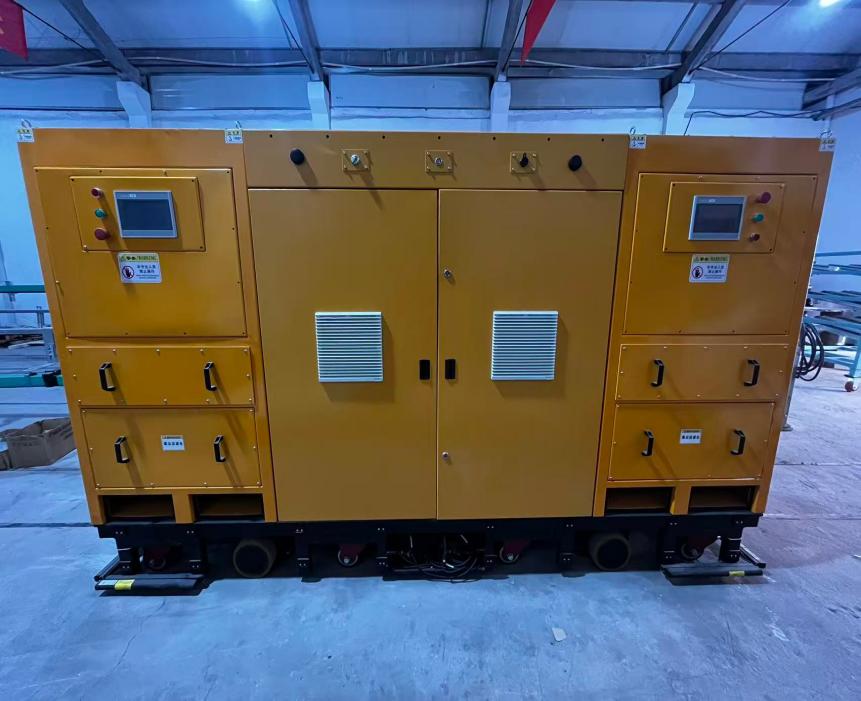
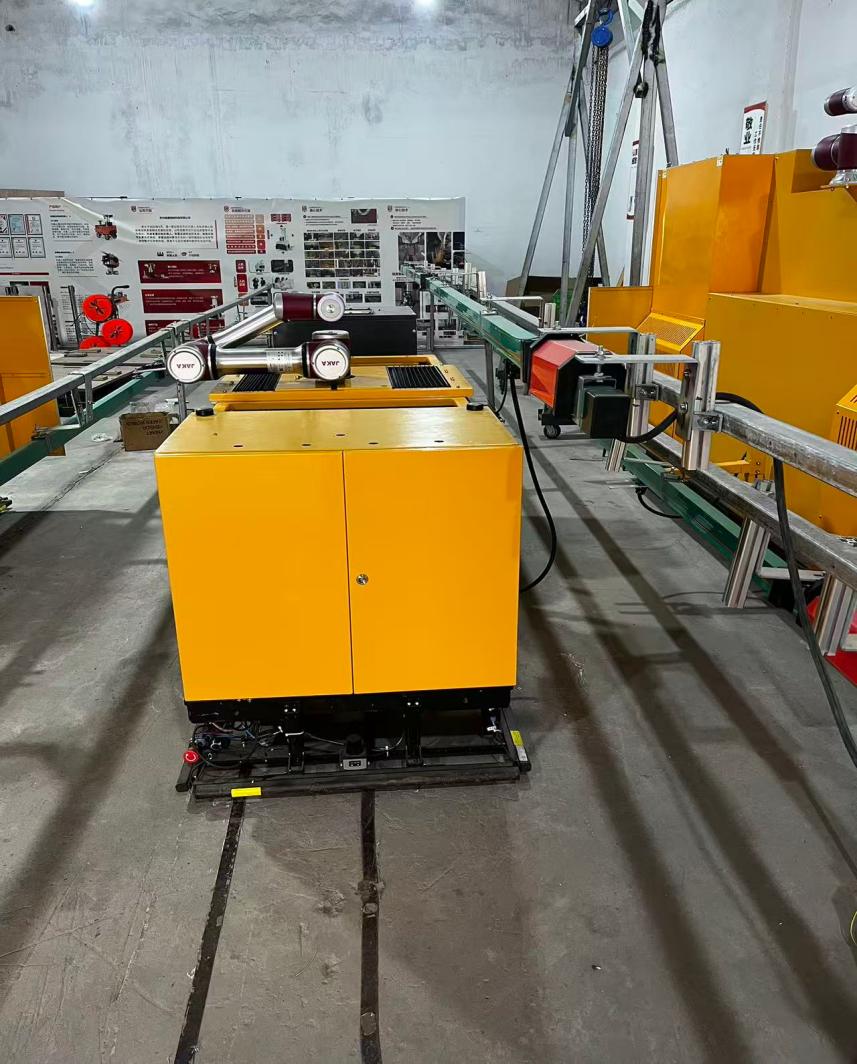
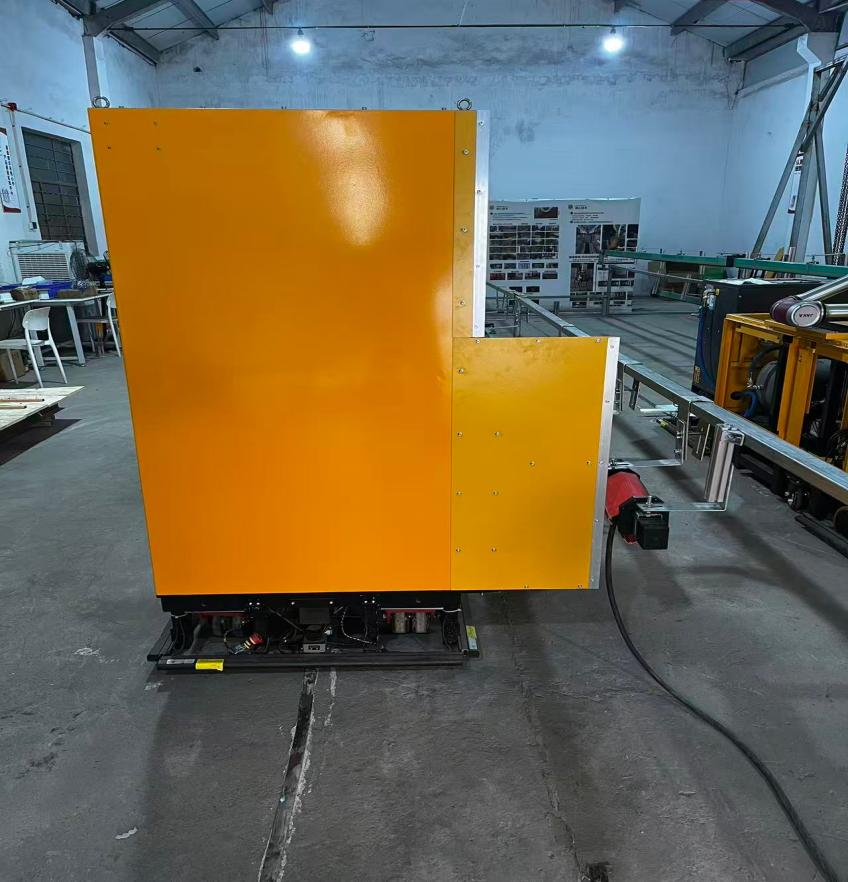
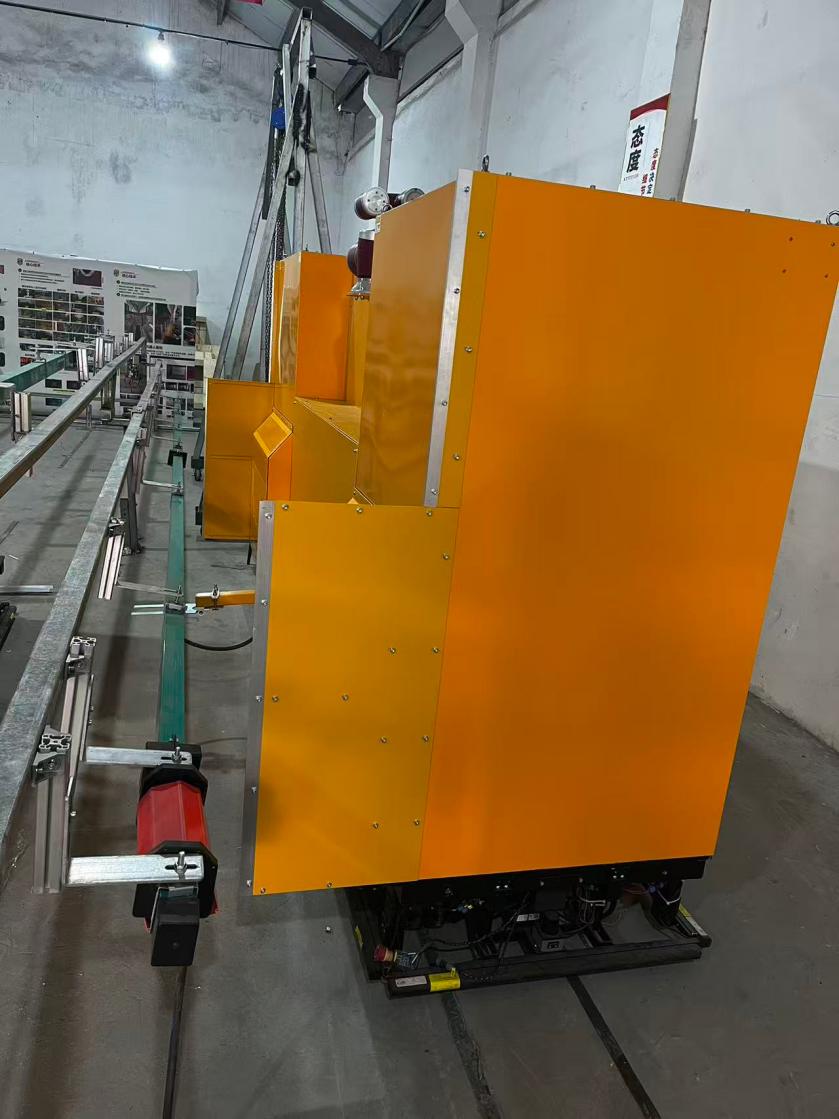
Train Underbody Air-Blowing Robot System
Precise positioning, on-demand air blowing and closed-loop dust collection.
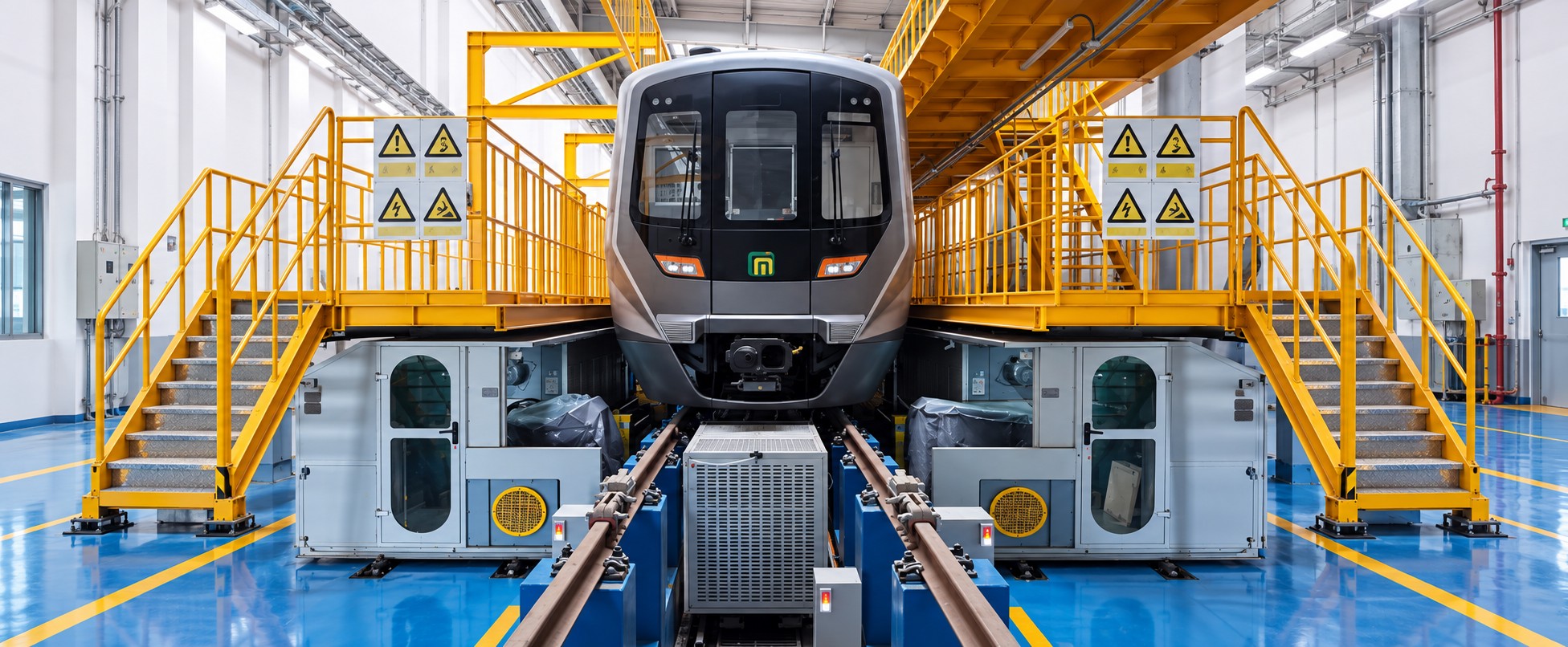
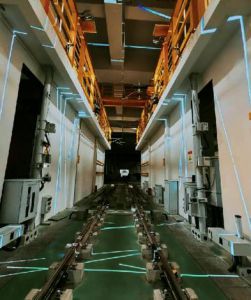
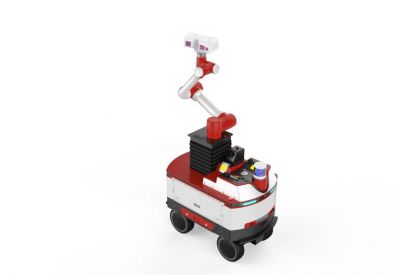
This fully automated under-vehicle cleaning system integrates a six-axis robotic arm, a linear sliding table, a profile scanning module, an intelligent navigation system, and an efficient dust removal device. It enables end-to-end automated operations—including precise positioning, on-demand cleaning, and closed-loop dust removal—for various components of rail transit vehicles, such as traction boxes, traction motors, air compressors, and auxiliary power boxes. By replacing traditional manual cleaning operations, this system significantly enhances operational efficiency and standardizes cleaning procedures, and has already been widely deployed in the depots of multiple urban rail transit lines.
Solution
For under-carriage cleaning and dust removal applications in rail transit depot environments, we provide a comprehensive automated under-carriage cleaning robot solution. This solution integrates a cleaning robot unit, a dust removal unit, an intelligent navigation and contour scanning unit, and an operational control system, replacing traditional manual handheld cleaning operations. It enables precise coverage of all critical under-carriage components—including traction boxes, traction motors, air compressors, and auxiliary power boxes—while allowing customization of cleaning strategies and intensity levels based on vehicle model and specific component requirements. The system is further equipped with a negative-pressure dust collection system to achieve closed-loop dust collection and treatment. The solution can seamlessly integrate with existing depot operational workflows, support dual-site remote management (on-site and DCC), and help customers achieve automation, standardization, and environmental compliance upgrades for under-carriage cleaning operations. It is well-suited to meet daily operational and maintenance needs across various rail transit depot types, including metro and suburban rapid transit systems.
Overall Technical Parameters
Technical Specifications Specific parameter itemsparameter values
system composition Purging Robot 1 set
dust separation plant 2 set
Contour Scanning Module 1 set
Control terminal 1 set
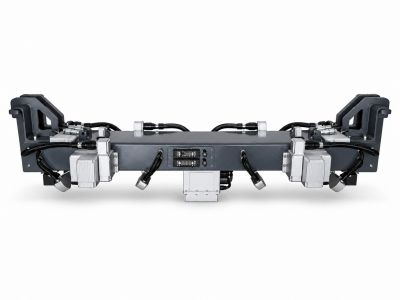
Motion Platform overall dimensions 1300×800×900mm
weight of equipment ≤650kg
translation distance 255mm
Lifting distance 500mm
Six-axis robotic arm model JAKA Zu5
working radius 954mm
Repositioning Accuracy ±0.02mm
navigation and location Overall navigation and positioning accuracy ±10mm
Magnetic navigation detection accuracy 1mm
Magnetic navigation response time 5ms
3D depth resolution 1280×720
3D depth accuracy 5mm
Purge system gas displacement 250L/min
Purge pressure 0.4-0.7MPa
Adjust gear High / Medium / Low three‑level settings
dust-removal system Maximum negative pressure 1000Pa
air flow rate 5000L/min
Filtering precision 10-15μm
filter efficiency 99.5%
filter area 72㎡
Working Principle
(1) Introduction Based on magnetic‑strip navigation and RFID positioning, the system realizes preliminary identification of vehicle body position. The 3D profile scanning module collects three‑dimensional information of under‑vehicle components for secondary position correction. The control system plans the optimal blowing path and drives the six‑axis robotic arm to move the blowing nozzle along the preset trajectory, delivering high‑pressure clean airflow to remove floating dust and debris on the surfaces of under‑vehicle components. Meanwhile, the dust‑removal system is activated to create an enclosed negative‑pressure space in the blowing area via dust shields and air curtains. Dust‑laden gas is collected by double‑sided air suction ports and filtered through high‑precision membrane‑coated filter elements before clean air is discharged. Supported by intelligent algorithms and multiple types of sensors, the system implements safety protection and operation management, with the whole process requiring no manual intervention. (2) Process Flow Chart Vehicle positioning → Profile scanning and identification → Navigation and positioning correction → Path planning → Robotic‑arm blowing operation → Synchronous dust removal and filtration → Operation effect verification → Equipment reset
Why Choose Us
Multi-point precise purging
Integrating multi-modal correction technologies—including magnetic stripe navigation, RFID positioning, and 3D scanning—along with a six-axis robotic arm featuring repeat positioning accuracy of ±0.02 mm, this system ensures precisely controllable cleaning positioning, providing comprehensive coverage of all under-vehicle components.
The purge parameters are flexibly adjustable
The purge pressure ranges from 0.4–0.7 MPa, with three adjustable settings: high, medium, and low. The exhaust flow rate reaches 250 L/min, and the number of purge cycles can be configured based on the degree of contamination of the components, making it suitable for diverse cleaning requirements.
Closed-loop dust removal: green and environmentally friendly
The dust shield and air curtain together create a sealed negative-pressure zone, while dual-sided suction enhances dust collection efficiency; when paired with a high-precision laminated filter element, it achieves a filtration efficiency of 99.5%, supports automatic pulse reverse-blowing for dust cleaning, and prevents secondary dust generation.
Intelligent control ensures safety and reliability.
Equipped with an operational management system, it supports customizable purge tasks and remote control across multiple endpoints; it also features multiple safety protection mechanisms—including lidar, ultrasonic radar, and physical collision avoidance—enabling safe, unmanned operations.
About Us
Founded in 2018, DITT applies AI visual intelligence to rail transit. Built on our own visual perception algorithms, intelligent hardware and O&M systems, we deliver a full inspection portfolio spanning onboard and wayside applications, now serving 20+ rail transit systems across China.

Together with our subsidiaries — Zhonggang Maintenance, Zhongshu Laser and Yunshang Urban Rail — we are moving rail transit O&M toward predictive maintenance and full-lifecycle management.
0
Company Establishment
0+
Invention Patents
0+
Metro Clients Served
0%+
R&D Proportion of Revenue
Ready to find the right solution?
Our engineers will recommend the best-fit configuration for your specific application — at no cost.
Inquire Now
Related Products
The 360 system integrates high-definition imaging and deep learning technologies to enable non-stop intelligent detection, accurately identifying the status of critical components in trains. This capability facilitates efficient fault diagnosis in metro operations and maintenance, thereby providing comprehensive safeguards for the operational safety of urban rail transit systems.
The vehicle inspection robot system primarily consists of a robot, charging stations, track transfer equipment, a wireless network, a backend processing center, and a management platform. By leveraging the robot, computer vision technology, diverse control techniques, and advanced algorithms, the system automatically captures images of the undercarriage and side of the vehicle, and can utilize these algorithms to detect and identify vehicle anomalies.
Based on a non-contact track inspection framework, this system employs the inertial reference measurement principle and integrates multiple precision sensors to leverage operational vehicles as carriers, enabling dynamic, real-time monitoring of track geometric parameters and track inspection defects.
Latest News
On September 18, the three-day "2025 China International Urban Rail Transit Exhibition" (MetroTrans 2025) officially opened at the CRCC Qingdao World Expo City.
On August 30, 2025, Changzhou Metro Group held the "Changzhou Metro Line 1 EMU Intelligent Inspection System Expert Review Meeting" at the Baizhang Depot.
Frequently Asked Questions
Can this equipment be adapted for under-vehicle cleaning of different vehicle models?
Yes. The system supports the addition of new vehicle models and component information, is compatible with a variety of urban rail vehicles, and allows for the customization of corresponding purge schemes based on the undercarriage component layout of different vehicle models.
Can the purge pressure and the number of purge cycles be adjusted?
Yes. The equipment's purge pressure is adjustable within the range of 0.4–0.7 MPa, with three preset levels: high, medium, and low; additionally, the number of purge cycles can be configured based on the degree of contamination of the components, allowing flexible adaptation to diverse cleaning requirements.
How does the equipment ensure the accuracy of the purge positioning?
The equipment employs a multi-stage positioning correction mechanism: initial positioning is achieved via magnetic stripe navigation and RFID positioning, followed by secondary correction using a 3D scanning module and the end effector of the robotic arm; the overall navigation and positioning accuracy is ±10 mm, while the robotic arm's repeatability accuracy is ±0.02 mm, ensuring precise purge positioning.
Can the dust generated during purging cause secondary pollution?
No. The equipment is equipped with a dust removal system that utilizes a dust shield and a air curtain to create a sealed negative-pressure zone, with dust collected via dual-sided suction. The dust-laden gas is then filtered through a high-precision filter element (10–15 μm), achieving a filtration efficiency of 99.5%. The system also supports automatic pulse reverse-blowing for dust cleaning, ensuring no secondary dust generation.
Does the device support remote management?
Support: The system is equipped with an operational management system that enables dual-terminal remote management—via both on-site control terminals and the DCC—thereby facilitating managers in assigning tasks and monitoring equipment operating status.
What safety protection measures are implemented for the equipment?
The equipment features four layers of safety protection: first, an algorithmic simulation of motion trajectories to prevent collisions with components; second, dual-sided coverage by a 270° LiDAR sensor, providing three-level warning alerts based on the distance to obstacles; third, supplementary detection via ultrasonic radar; and fourth, hardware safeguards—including physical anti-collision strips and emergency stop buttons—ensuring comprehensive operational safety.
What are some real-world application cases for this equipment?
The equipment has been successfully deployed in multiple rail transit projects, including Line 15 of Hangzhou, Line 18 of Hangzhou, the Xiejia Village Depot of Line 17 of Beijing, and the Wuyang Depot of the Hangzhou–Deqing Metropolitan Railway.
Product Inquiry
Whether you'd like a quotation or simply want to learn more about us, we're happy to hear from you.
70
Phone
WhatsApp
Email
LinkedIn
Facebook