360 Intelligent Dynamic Visual Inspection System for Train Exterior
360° intelligent train exterior inspection without stopping.
The 360 system integrates high-definition imaging and deep learning technologies to enable non-stop intelligent detection, accurately identifying the status of critical components in trains. This capability facilitates efficient fault diagnosis in metro operations and maintenance, thereby providing comprehensive safeguards for the operational safety of urban rail transit systems.
Solution
A customized intelligent panoramic image inspection solution for the maintenance of rail transit vehicles
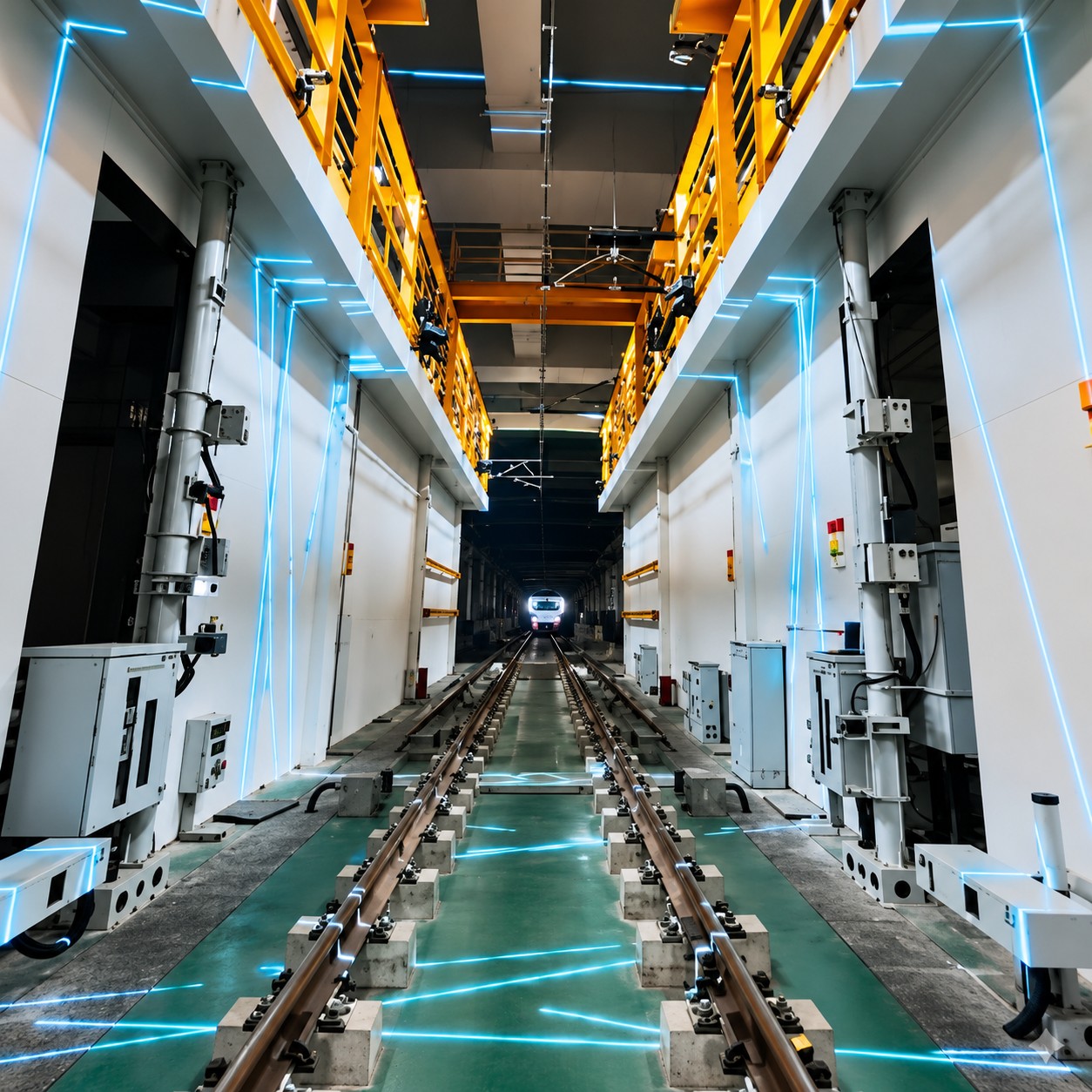
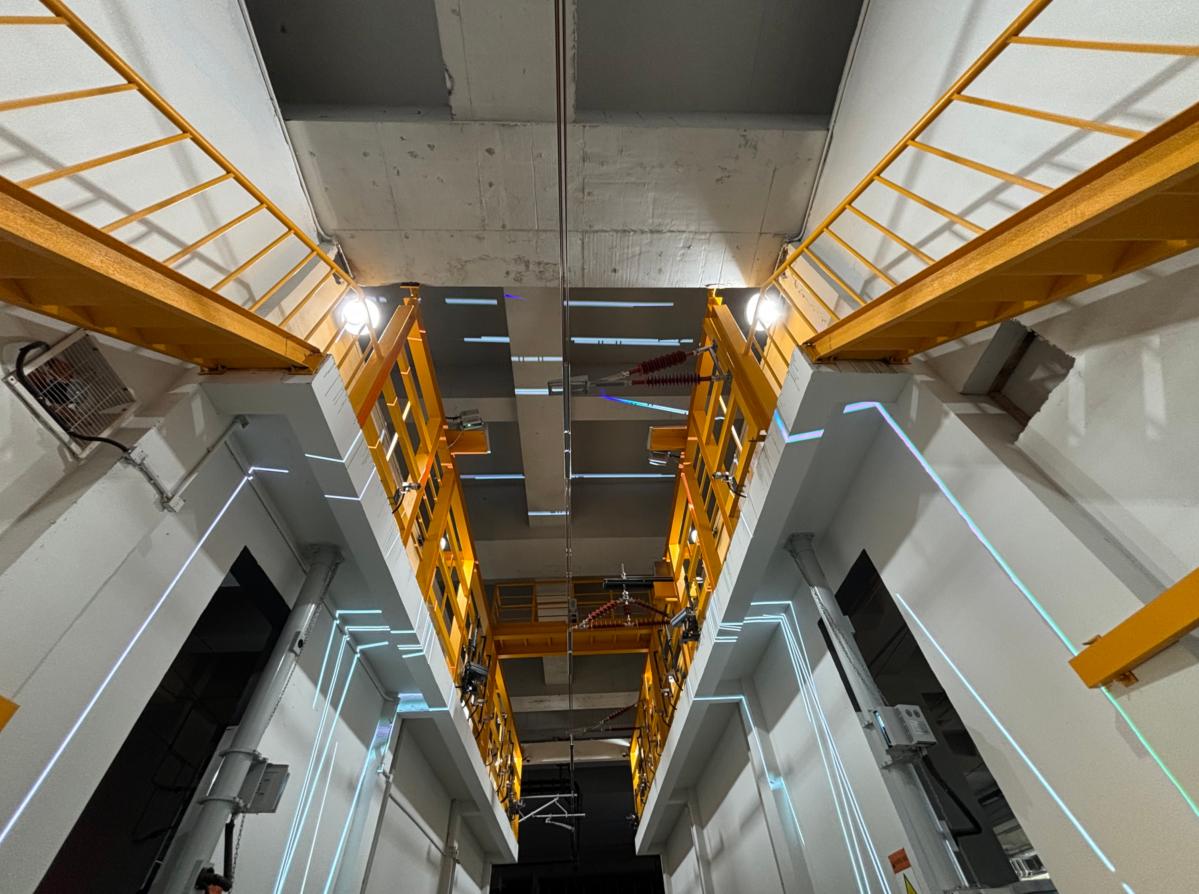
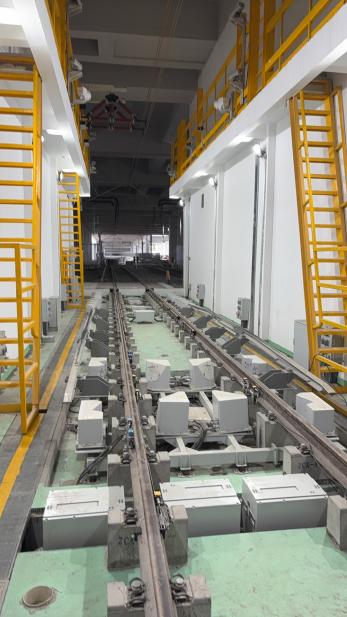
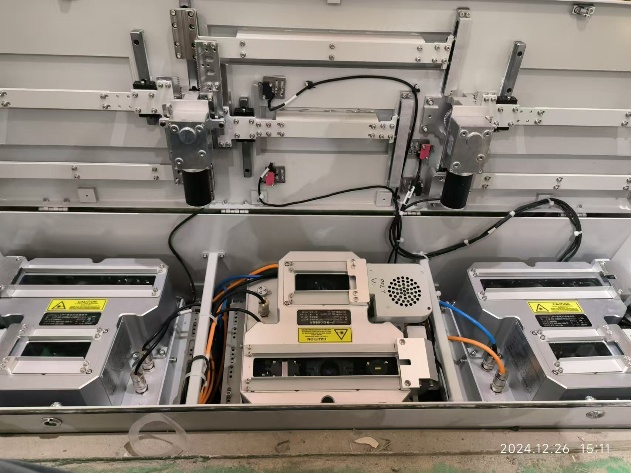
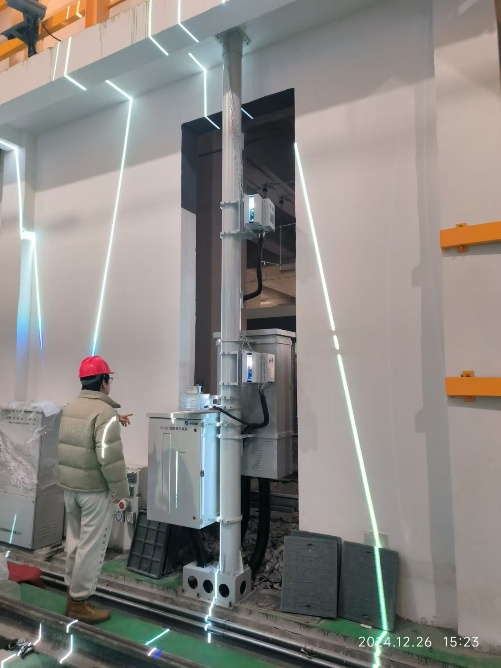
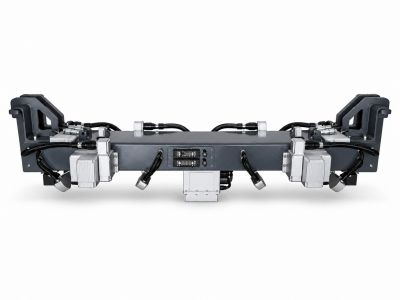
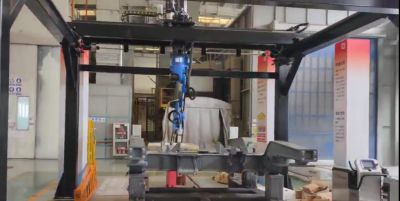
The Zhongshuzhike 360 Image Detection System is installed at the vehicle entry/exit bottleneck area of the station and features automated vehicle boarding and alighting capabilities. Utilizing technologies such as real-time image processing, high-precision speed measurement, and pattern recognition, the system captures panoramic high-definition 2D/3D images of the vehicle roof, sides, and undercarriage. It automatically identifies anomalies—such as deformation or absence of critical components—in these images and displays the results. By employing multiple linear array sensors and 3D acquisition modules, the system enables stereoscopic, omnidirectional detection. Through intelligent image segmentation, it identifies vehicle compartments, then uploads fault diagnostics and raw data to the platform. This facilitates maintenance crews in verifying vehicle status and planning subsequent repairs.
Overall Technical Parameters
Technical Specifications Overall Parameters
2D Image Acquisition Module Resolution: ≤0.5 mm/pixel
3D Image Acquisition Module Resolution: ±1 mm/pixel
2D and 3D Image Alignment Alignment accuracy ≤5 pixels
Image Return Time Average latency ≤10 s; train-passing data stored within 120 s
Car Number Recognition Accuracy ≥99.9%
Speed Measurement Module Speed measurement accuracy: 0.1 km/h; sampling frequency: ≥10 times/s
Train Reception Speed Allowed 0–30 km/h; bidirectional and variable-speed passing, low-to-medium speed stop detection
File Retention Period Raw images >3 months; fault data 5 years
Indoor/Outdoor Protection Grade ≥IP65
2D Module - Power Supply Voltage DC24V
2D Module - Output Resolution 4096 (line scan)
2D Module - Data Communication Interface Gigabit Ethernet
2D Module - Light Source White laser, strobe, wavelength band 450–638 nm
2D Module - Control Signal Interface Supports differential signal (±6 V)
2D Module - Ingress Protection (IP) Rating IP67
2D Module - Operating Temperature -40°C to +75°C
2D Module - Operating Humidity 10%–90%, max not exceeding 95%
2D+3D Module - Power Supply Voltage DC24V
2D+3D Module - Output Resolution 4096 (line scan), 2560×832 (line scan, windowing supported)
2D+3D Module - Data Communication Interface Gigabit Ethernet
2D+3D Module - Light Source 2D: white laser strobe; 3D: 808–915 nm
2D+3D Module - Control Signal Interface Supports differential signal (±6 V)
2D+3D Module - Ingress Protection (IP) Rating IP67
2D+3D Module - Operating Temperature -40°C to +75°C
2D+3D Module - Operating Humidity 10%–90%, max not exceeding 95%
Center Track Pit - Door Motor Power Supply DC24V/5A
Center Track Pit - Door Opening Time <2 s (meets train-passing capture requirement)
Center Track Pit - Water Pump Power Supply DC24V/8A
Center Track Pit - Fan Power Supply DC24V
Center Track Pit - Cable Outlet φ90 mm × 2
Center Track Pit - Dimensions Customized
Center Track Pit - Internal Carrying Component Each pit carries one 2D+3D imaging module
Track-side Pit (L/R) - Door Motor Power Supply DC24V/5A
Track-side Pit (L/R) - Door Opening Time <2 s (meets train-passing capture requirement)
Track-side Pit (L/R) - Water Pump Power Supply DC24V/8A
Track-side Pit (L/R) - Fan Power Supply DC24V
Track-side Pit (L/R) - Cable Outlet φ90 mm × 2
Track-side Pit (L/R) - Dimensions Customized
Track-side Pit (L/R) - Internal Carrying Component Each pit carries one 2D+3D imaging module
Side Canopy - Door Motor Power Supply DC24V/5A
Side Canopy - Door Opening Time <1.5 s
Side Canopy - Water Pump Power Supply DC24V/8A
Side Canopy - Fan Power Supply DC24V
Side Canopy - Cable Outlet φ110 mm × 1
Side Canopy - Dimensions Customized
Side Canopy - Internal Carrying Component Each canopy carries one 2D+3D imaging module
Wayside Cabinet - Function Description The power box is the main power distribution unit of the 360 system, responsible for total power distribution (including power filtering); it also controls the pits and side boxes
Wayside Cabinet - Input Voltage AC220V
Wayside Cabinet - Rated Power 8000 W
Wayside Cabinet - Camera Power Supply DC24V, 14 channels
Wayside Cabinet - Camera Trigger Differential, 14 channels
Wayside Cabinet - Fan Power Supply 10 channels
Wayside Cabinet - Main Power Input AC220V
Wayside Cabinet - Dimensions Customized
Wayside Cabinet - Operating Temperature -25°C to 50°C
Wayside Cabinet - Storage Temperature -40°C to 75°C
Wayside Cabinet - Humidity 10%–90%
Working Principle
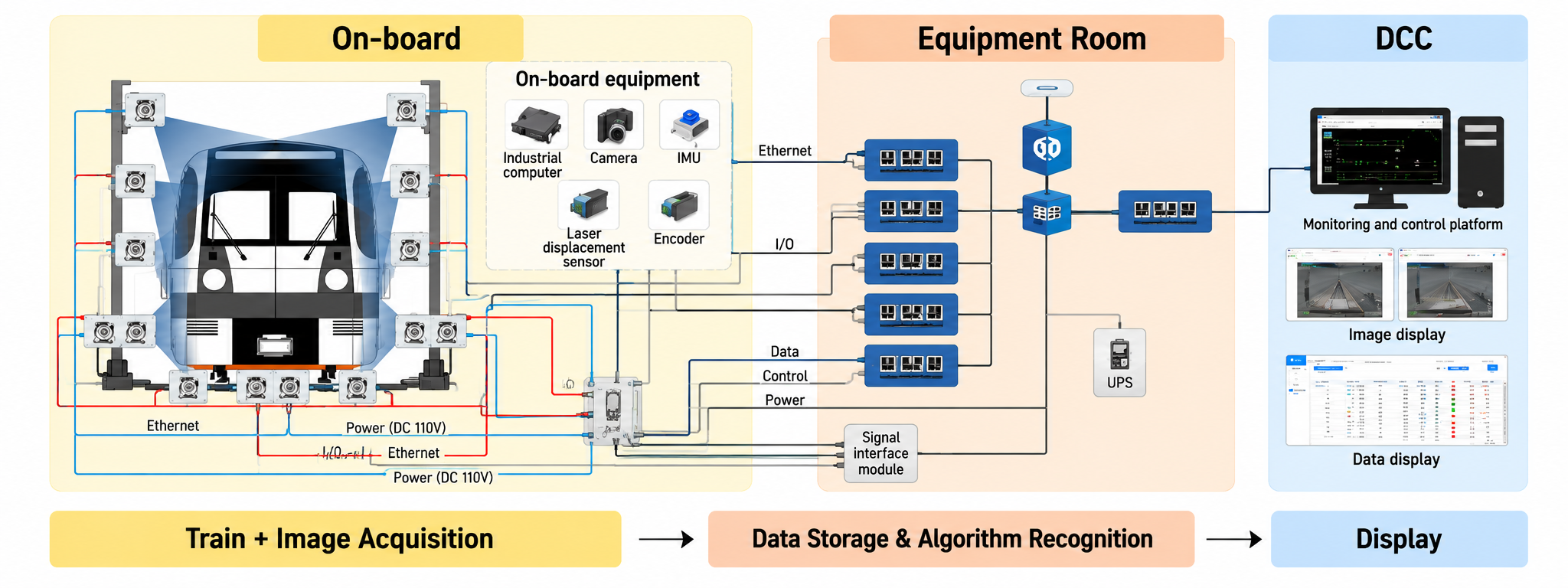
1. Train Reception and Data Collection: Multiple sets of cameras, light sources, radars and sensors are deployed track‑side. When a train passes by, the system is automatically triggered to capture 360‑degree high‑definition images of the train body. 2. Storage and Identification: The collected data is transmitted to the equipment room via the network for centralized storage by the server cluster. Intelligent algorithms are adopted to conduct automatic image analysis and fault identification. 3. Display and Review: Processing results are pushed in real time to DCC (Depot Control Center) terminals. Detection results are presented on visual interfaces to support efficient manual review and maintenance.
Why Choose Us
High efficiency and rapid performance, optimized for high traffic volumes.
A single train inspection suite covers over 10,000 inspection items, with each inspection yielding results in under 15 minutes and train passage inspections completed in as little as 3 minutes. This ultra-short processing time perfectly aligns with the high-traffic, batch-based daily maintenance requirements of metro systems, significantly enhancing operational and maintenance efficiency.
Precise identification to reduce the missed detection rate.
The average failure detection rate exceeds 95%, while the failure detection rate for critical parameters can reach 99%. Leveraging continuously optimized algorithms and pixel-level image alignment technology, the system significantly reduces the risk of missed detections, enabling operations and maintenance personnel to accurately identify potential hazards and thereby ensure operational safety.
Low false positive rate, enhancing review efficiency
The average number of false alarms per vehicle is fewer than 15. By employing an optimized comparison algorithm, the system effectively reduces unnecessary verification work, significantly alleviating the manual workload and enabling maintenance personnel to focus on addressing genuine faults.
Stable and reliable, operating 24/7
Utilizing industrial-grade hardware, the system supports 24/7 automated operation. It features multi-sensor fusion for speed and speed variation detection, bidirectional vehicle detection, and mid-trip stop detection capabilities, enabling comprehensive vehicle coverage across all inspection points and targeted screening of fasteners.
About Us
Founded in 2018, DITT applies AI visual intelligence to rail transit. Built on our own visual perception algorithms, intelligent hardware and O&M systems, we deliver a full inspection portfolio spanning onboard and wayside applications, now serving 20+ rail transit systems across China.

Together with our subsidiaries — Zhonggang Maintenance, Zhongshu Laser and Yunshang Urban Rail — we are moving rail transit O&M toward predictive maintenance and full-lifecycle management.
0
Company Establishment
0+
Invention Patents
0+
Metro Clients Served
0%+
R&D Proportion of Revenue
Ready to find the right solution?
Our engineers will recommend the best-fit configuration for your specific application — at no cost.
Inquire Now
Related Products
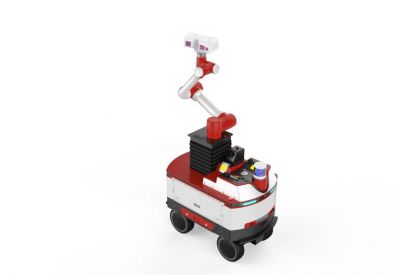
The vehicle inspection robot system primarily consists of a robot, charging stations, track transfer equipment, a wireless network, a backend processing center, and a management platform. By leveraging the robot, computer vision technology, diverse control techniques, and advanced algorithms, the system automatically captures images of the undercarriage and side of the vehicle, and can utilize these algorithms to detect and identify vehicle anomalies.
Based on a non-contact track inspection framework, this system employs the inertial reference measurement principle and integrates multiple precision sensors to leverage operational vehicles as carriers, enabling dynamic, real-time monitoring of track geometric parameters and track inspection defects.
Integrating core technologies—including dry ice cleaning technology, robotics, and computer vision—this equipment enables fully automated operation across the entire rack cleaning process. It delivers superior performance, adheres to green environmental standards, and achieves high operational efficiency, with a single-unit rack cleaning efficiency of 20–30 minutes per unit. As a core piece of equipment independently developed by Zhongshu Laser, it has already been successfully deployed in practical applications at CRRC.
Latest News
On September 24, Li Jun, Deputy Director of the Qiantang New Area Management Committee of Hangzhou, Zhejiang Province and President of the district’s Western Returned Scholars Association, led a delegation from the Association on a visit to DITT.
On September 18, the three-day "2025 China International Urban Rail Transit Exhibition" (MetroTrans 2025) officially opened at the CRCC Qingdao World Expo City.
Frequently Asked Questions
Regarding the number of false alarms as the duration of device deployment and operation increases
Some marked-line images may appear blurred due to positional or prolonged exposure-related contamination, which can compromise detection accuracy and increase false positives. For such cases, targeted corrective actions should be implemented, or the detection mode should be adjusted accordingly.
Why are some minor faults difficult to detect?
While the system can detect obvious large-area failures, it may fail to identify subtle or early-stage failure characteristics—such as micro-cracks or slight bolt loosening—due to limitations in image resolution and the trade-off between false positive rates and detection accuracy. In such cases, dedicated detection algorithms can be configured to target specific critical areas for inspection.
What are the requirements for train passage when it passes through inspection equipment?
First, there is a speed limit: the camera's acquisition frequency has an upper bound. If the train speed exceeds this limit, the camera's frequency may fail to keep pace, leading to image compression, loss of acquired data, and potential failure to detect faults. It is recommended to keep the train speed below 30 km/h. Additionally, our equipment employs a self-developed speed measurement system and an image alignment algorithm, enabling it to handle scenarios involving rapid speed changes, overtaking, or intermediate stops. This design facilitates co-location with other equipment requiring temporary stops, such as traffic signal controllers and car wash machines.
Does the flow of traffic during daytime and nighttime affect the detection results?
The system employs an in-house white laser illumination, ensuring stable imaging performance and minimal susceptibility to ambient light interference.
How to maintain trackside equipment and systems
Due to foundation settlement or train-induced vibrations, the camera's shooting angle may undergo slight deviations, which can lead to misalignment in image stitching or inaccurate measurements; therefore, regular manual inspections or recalibration are required. Following system acceptance and delivery, personnel from the construction team will receive training, along with a complete set of training materials and maintenance manuals, and will also benefit from after-sales support services.
Product Inquiry
Whether you'd like a quotation or simply want to learn more about us, we're happy to hear from you.
312
Phone
WhatsApp
Email
LinkedIn
Facebook