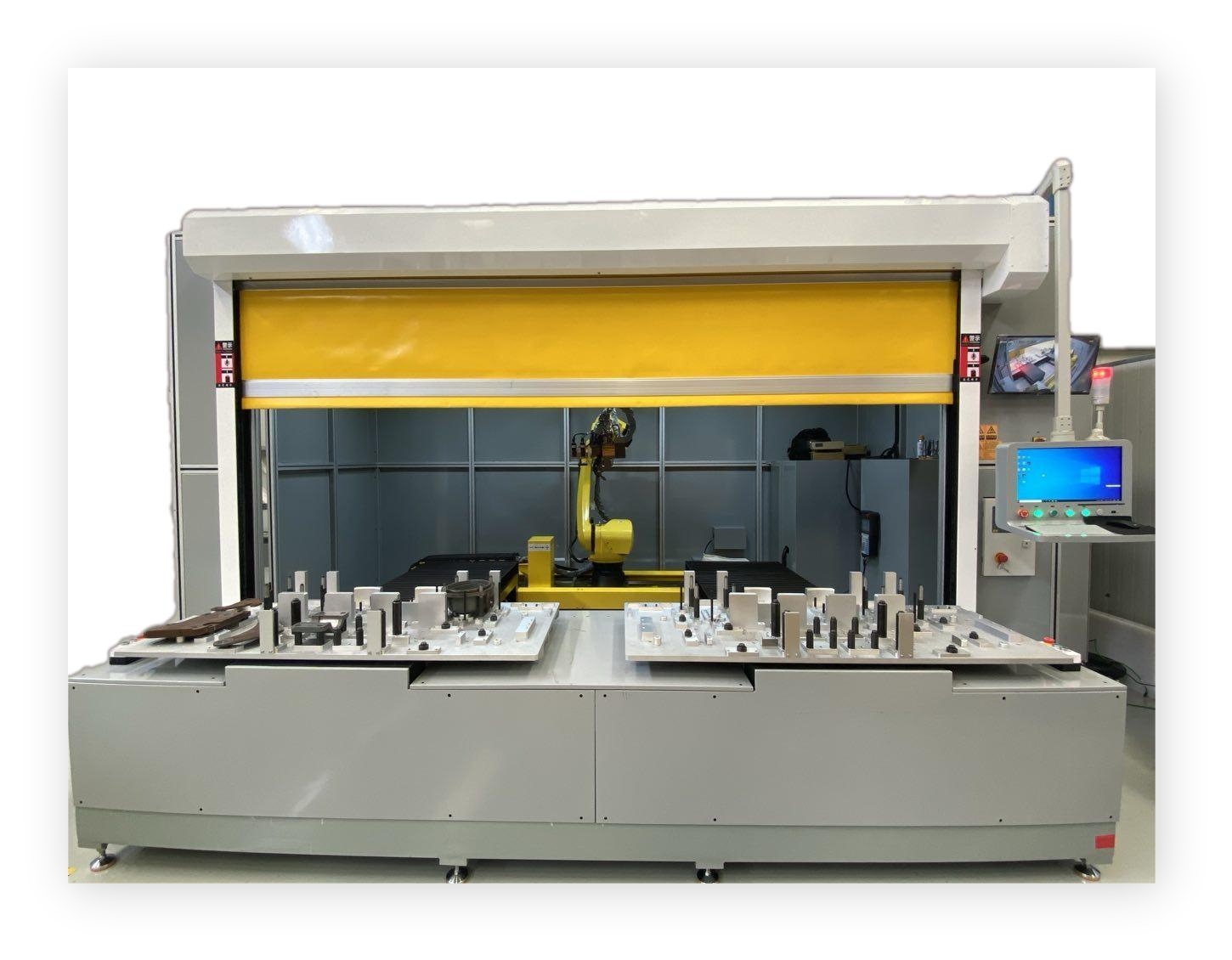
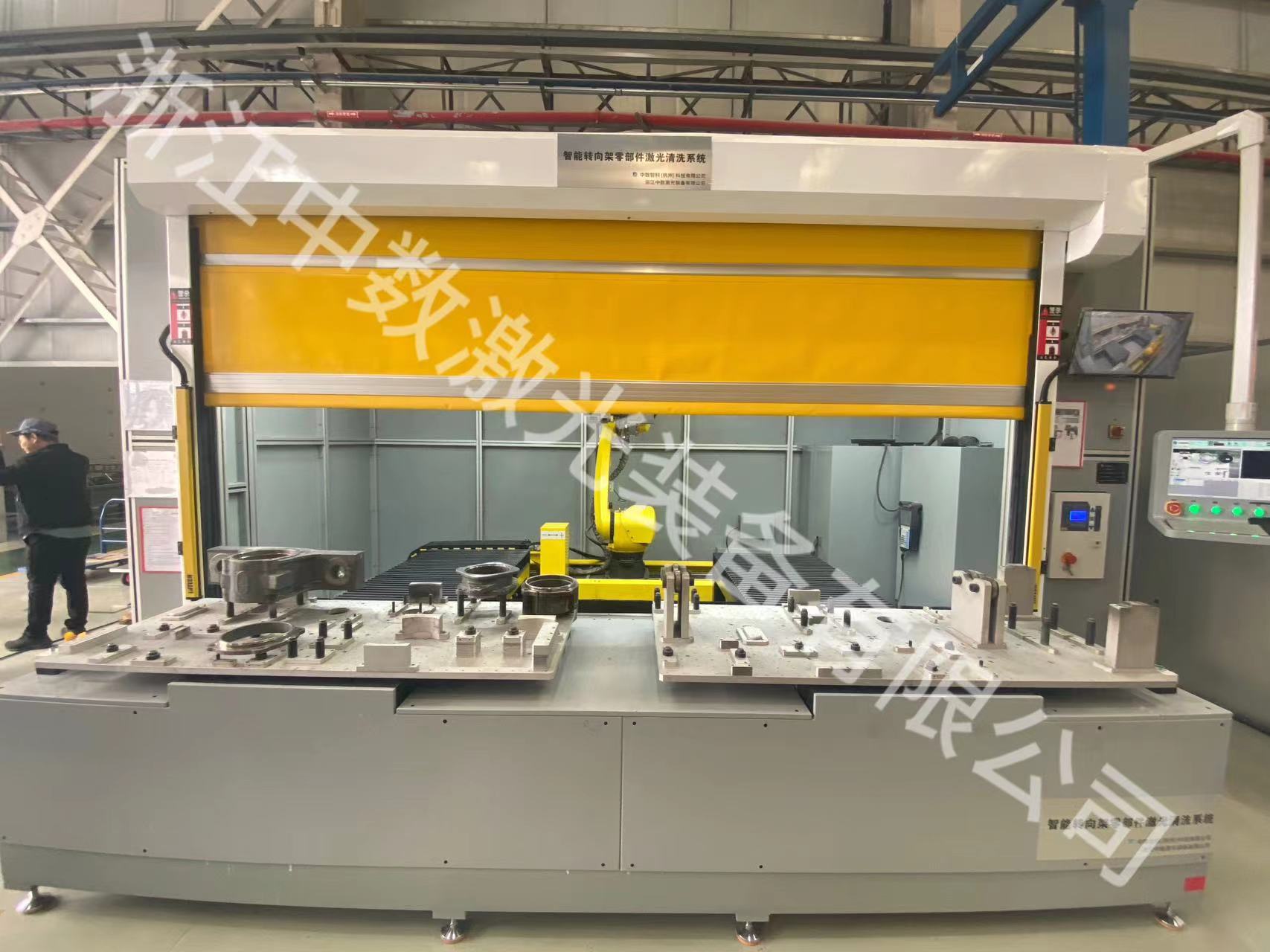
Intelligent Component Laser Cleaning System
Automated intelligent laser cleaning for irregular bogie components.
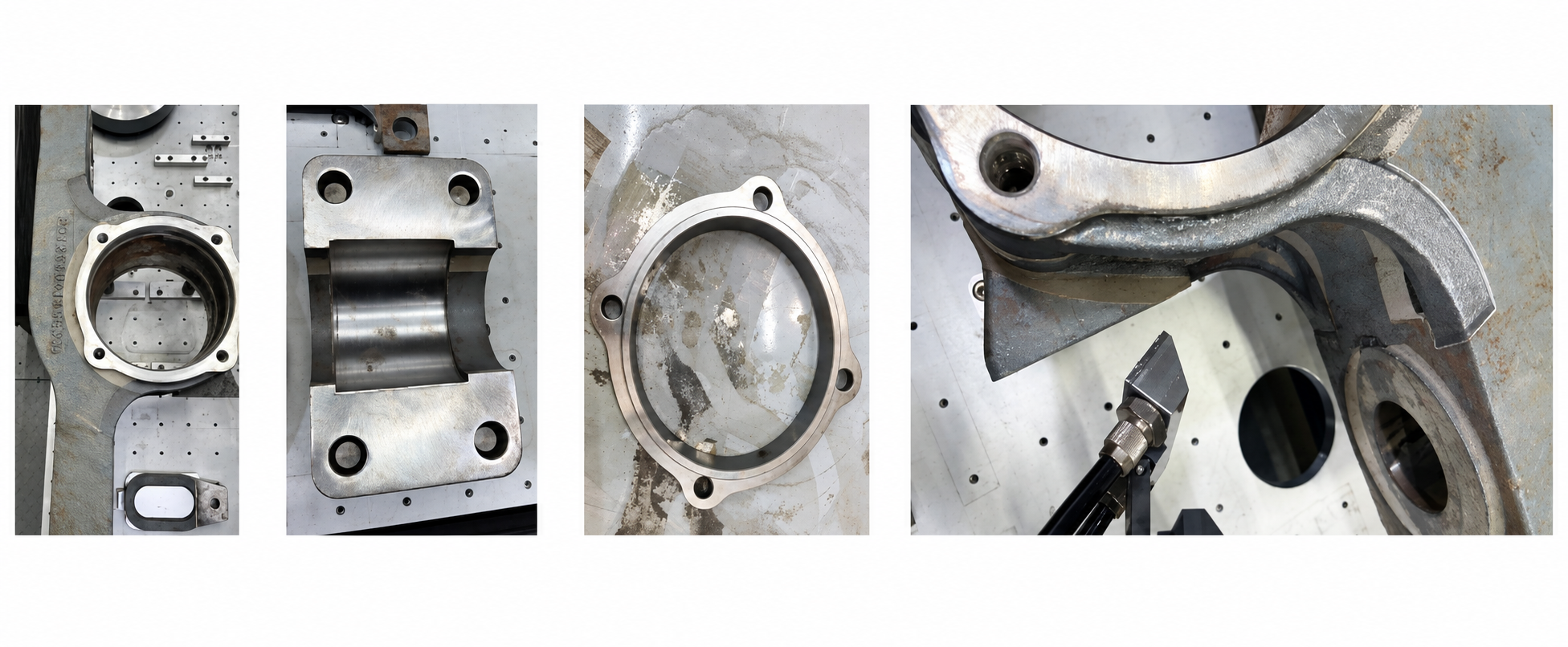
Integrating advanced technologies—including composite lasers, vision recognition, offline simulation, seven-axis robots, and an integrated operational platform—this system enables automated and intelligent cleaning operations (including paint removal, rust removal, adhesive removal, and oil stain removal) for various irregularly shaped components of bogies. It represents the first dedicated laser cleaning equipment for bogie components in the industry. The dust and fumes generated during the cleaning process are purified by a dust purification unit, allowing for direct, harmless discharge.
Solution
For rail transit bogie component maintenance scenarios, we provide an intelligent laser cleaning end-to-end solution. Specifically designed for irregularly shaped components—such as gearboxes, shock absorbers, and frame accessories—this solution replaces conventional manual sandblasting and chemical cleaning processes. It can be seamlessly integrated into bogie maintenance assembly lines to enable automated and standardized cleaning operations. This approach addresses key challenges of traditional methods—such as high levels of contamination, inadequate cleaning of hard-to-reach areas, and inconsistent quality—thereby enhancing both the efficiency and quality of component maintenance.
Overall Technical Parameters
Technical Specifications parameter value
Cleaning Process Composite laser cleaning
Robot Configuration Seven-axis flexible articulated arm
Visual positioning accuracy ±0.1mm
Single-unit cleaning time (gearbox) 30 seconds per piece
Cleaning coverage rate 99.9%
Applicable substrate Cermet composite materials
Overall automation rate 95%
Dust recovery rate Over 98%
Working Principle
(1) Introduction: The device acquires the 3D contour of the workpiece through 3D visual scanning. AI algorithms automatically generate the optimal cleaning path and control the seven‑axis robot to move the laser head along the workpiece surface. High‑energy laser acts on the workpiece surface to thermally vaporize, expand and peel off dirt layers. Meanwhile, the supporting negative‑pressure dust‑removal system collects generated smoke, dust and debris in real time, realizing non‑contact and damage‑free intelligent cleaning. (2) Process Flow Chart: Workpiece Loading → 3D Visual Scanning → Automatic Path Planning → Flexible Laser Cleaning → Blowing and Dust Removal → Quality Inspection → Workpiece Unloading
Why Choose Us
AI-powered intelligent recognition and localization
Equipped with a 3D vision recognition system, featuring a positioning error of ±0.1 mm and a changeover time of less than 2 minutes for complex, irregularly shaped components.
Seven-axis flexible full-coverage
The seven-axis flexible articulated arm can cover up to 120 recessed dead zones, increasing the cleaning rate from 70% with conventional processes to 99.9%.
Zero pollution, low energy consumption
Dust recovery rate exceeds 98%, VOCs reduction reaches 100%, and energy consumption per cleaning cycle is only 10% of that in conventional sandblasting processes.
Excellent adaptability across multiple substrates
It is compatible with a wide range of substrates, including metal, ceramic, and composite materials, offering broad applicability to meet the cleaning requirements of diverse components.
About Us
Founded in 2018, DITT applies AI visual intelligence to rail transit. Built on our own visual perception algorithms, intelligent hardware and O&M systems, we deliver a full inspection portfolio spanning onboard and wayside applications, now serving 20+ rail transit systems across China.

Together with our subsidiaries — Zhonggang Maintenance, Zhongshu Laser and Yunshang Urban Rail — we are moving rail transit O&M toward predictive maintenance and full-lifecycle management.
0
Company Establishment
0+
Invention Patents
0+
Metro Clients Served
0%+
R&D Proportion of Revenue
Ready to find the right solution?
Our engineers will recommend the best-fit configuration for your specific application — at no cost.
Inquire Now
Related Products
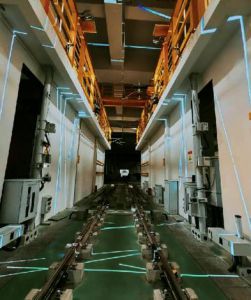
The integrated obstacle detection system deeply combines sensor data from visible light, infrared, millimeter-wave radar, and LiDAR to enable intrusion obstacle detection and safety early-warning capabilities in rail transit areas. The system is suitable for harsh operating conditions in tunnels and elevated open-air environments; it supports a variety of vehicle types—including metro, intercity rail, tram, and locomotive vehicles—and can also be extended to monitor the status of peripheral equipment and facilities along the main lines.
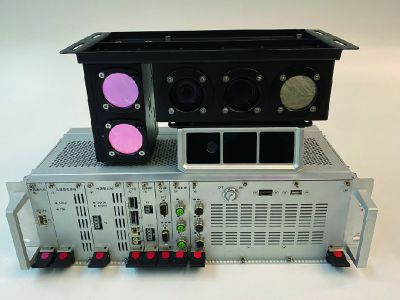
The 360 system integrates high-definition imaging and deep learning technologies to enable non-stop intelligent detection, accurately identifying the status of critical components in trains. This capability facilitates efficient fault diagnosis in metro operations and maintenance, thereby providing comprehensive safeguards for the operational safety of urban rail transit systems.
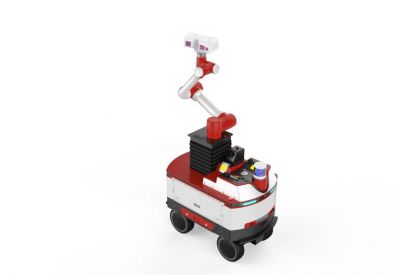
The vehicle inspection robot system primarily consists of a robot, charging stations, track transfer equipment, a wireless network, a backend processing center, and a management platform. By leveraging the robot, computer vision technology, diverse control techniques, and advanced algorithms, the system automatically captures images of the undercarriage and side of the vehicle, and can utilize these algorithms to detect and identify vehicle anomalies.
Latest News
On September 18, the three-day "2025 China International Urban Rail Transit Exhibition" (MetroTrans 2025) officially opened at the CRCC Qingdao World Expo City.
On September 24, Li Jun, Deputy Director of the Qiantang New Area Management Committee of Hangzhou, Zhejiang Province and President of the district’s Western Returned Scholars Association, led a delegation from the Association on a visit to DITT.
Frequently Asked Questions
Can components of different shapes be cleaned?
Yes. The equipment is equipped with a 3D visual recognition system, which can automatically identify the contours of various irregularly shaped workpieces, plan cleaning paths, and adapt to the structural characteristics of various components of the bogie.
Is it complicated to debug when changing the type of workpiece?
It is straightforward. The equipment features an integrated library of workpiece process parameters; during a tool change, users simply select the corresponding workpiece model, and the system automatically matches the appropriate parameters and tool paths. The tool change time is under 2 minutes.
Can the inner bore, gaps, and other areas of the workpiece be cleaned?
Yes. The seven-axis flexible robot can maneuver a specialized laser head into internal holes, narrow gaps, and other confined areas, achieving comprehensive coverage of all recessed dead zones within a 120° range, thereby eliminating cleaning blind spots inherent to conventional manufacturing processes.
Does the equipment place high demands on the operators?
The equipment's user interface is user-friendly, enabling personnel with basic industrial equipment operation experience to operate the equipment independently after short-term training.
How should the waste generated from cleaning be disposed of?
The equipment is integrated with an enclosed dust purification system capable of filtering, collecting, and cleaning dust and particulate matter generated during operation; the collected materials can be disposed of in accordance with standard industrial solid waste disposal protocols, and no hazardous waste is generated.
What are some real-world application cases for this equipment?
The equipment has been successfully deployed in the integrated cleaning project for vehicle components and axle boxes of Shenzhen Metro, and has passed the on-site acceptance inspection conducted by the project owner.
Product Inquiry
Whether you'd like a quotation or simply want to learn more about us, we're happy to hear from you.
249
Phone
WhatsApp
Email
LinkedIn
Facebook